
MES System — from the operator's report to OEE metrics and order settlement
Production data written down on paper reaches the office a day late and with no explanation of the losses. The SimplyMobile MES system captures it right at the workstation, the moment it happens — and instantly turns it into metrics and a settled order.
A terminal an operator can use with gloves on
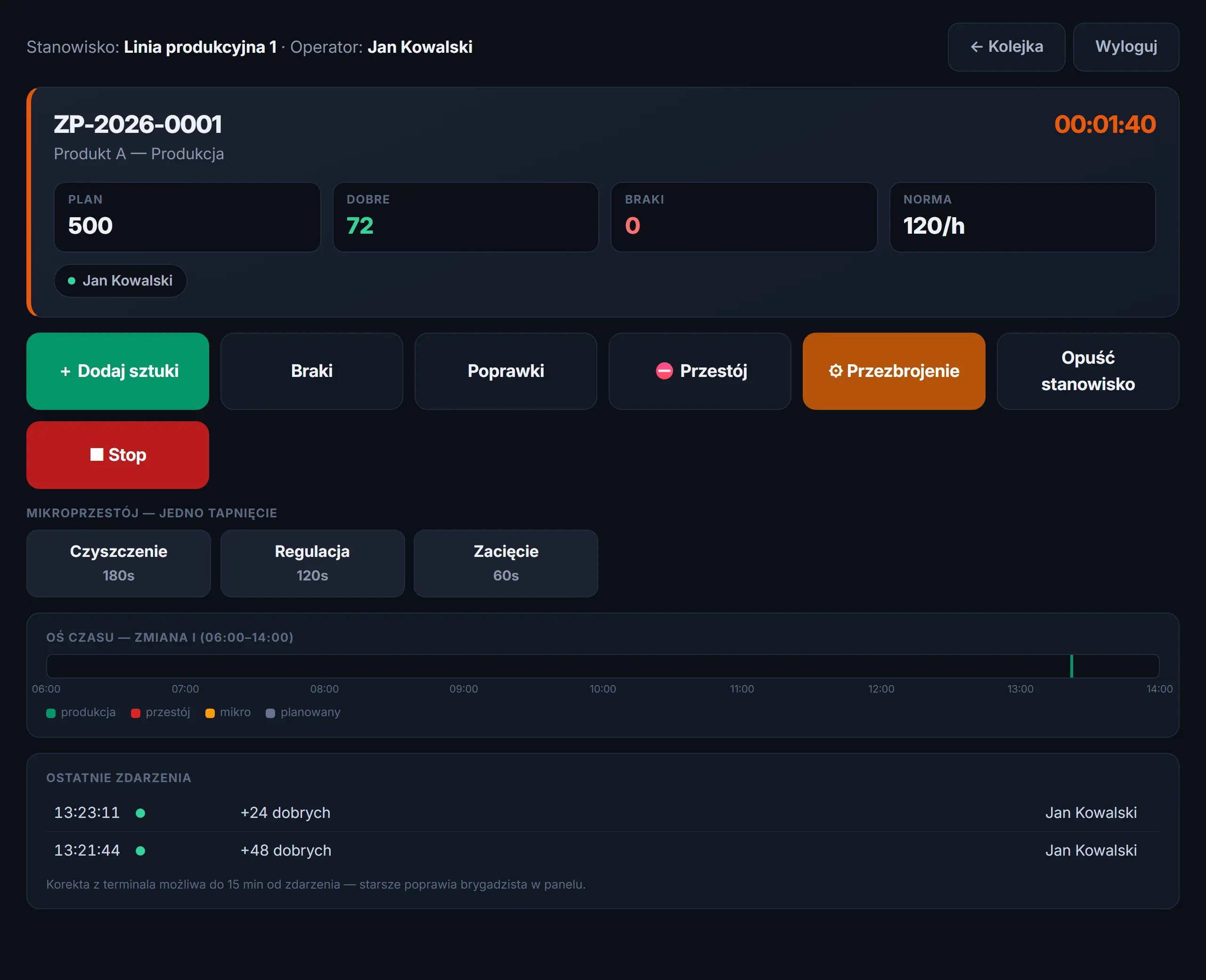
The entry point is a tablet terminal at the workstation. The operator selects a workstation, logs in with a PIN code and sees a work queue that matches the plan — with no hunting for the right order. The interface is designed for touch and for shop-floor conditions: large buttons, few steps, no keyboard typing.
On the work screen, the operator has everything needed to report:
- The operation plan and a completion counter (good / defective)
- The performance standard for this product and workstation
- A declaration of good units, defects with a cause and units for rework
- Downtime reporting from a list of causes (breakdown, no material, no staff, planned break)
- Micro-stops with a single tap (e.g. cleaning, adjustment, jam) — because short losses are the ones most often missing from reports
- A separate changeover state, so it isn't mixed up with a breakdown
- A shift timeline and a list of recent events, with the option to correct them for a set time after the event; older ones are fixed by the shift leader
Metrics that build themselves
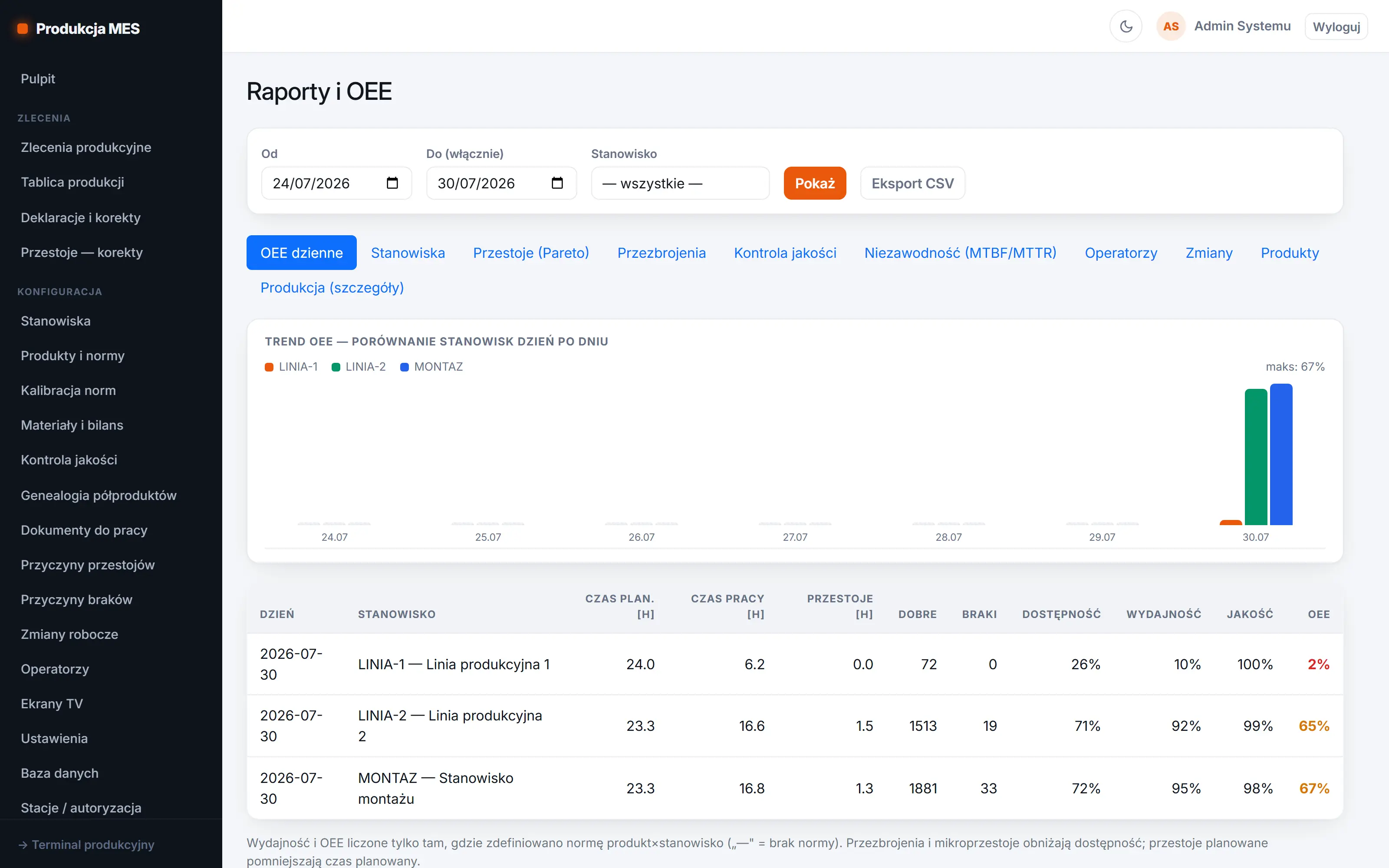
Since events are recorded the moment they occur, the metrics take no extra work. The system calculates OEE broken down into availability, performance and quality, and also provides operational reports:
- A Pareto chart of downtime — where you really lose time
- MTBF and MTTR — reliability and time to respond to breakdowns
- Production: daily, per workstation, per shift, per operator, per product
- Changeover times
- Multi-day trends for comparing periods
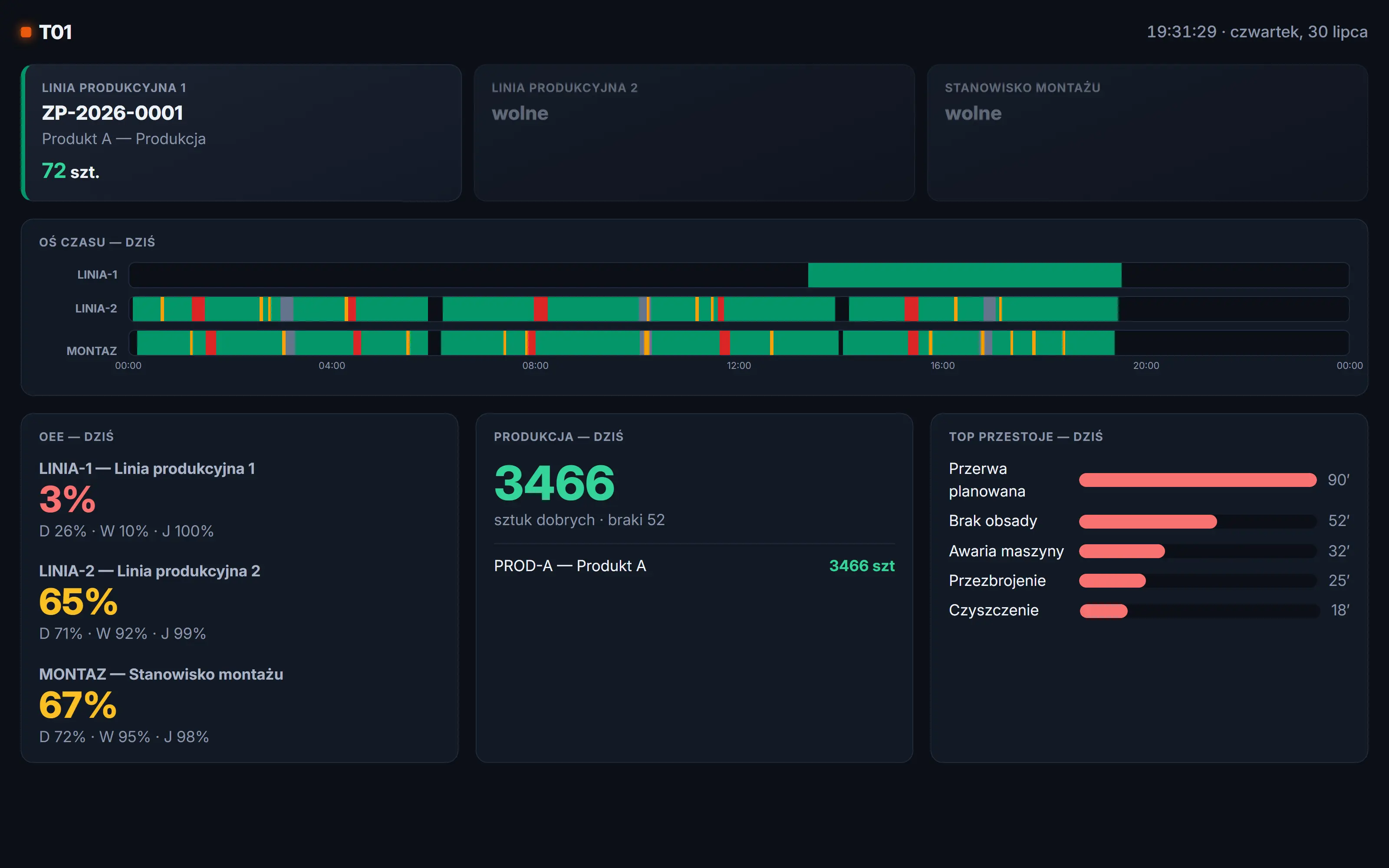
On top of that there is a kanban board of orders and a TV module — a dashboard for a shop-floor screen, so the crew can see the current status without asking anyone.
Quality, materials and traceability
MES is not just unit counters. The supporting modules cover several areas an auditor or customer will ask about anyway:
- Quality control — an inspection plan and recording of measurements with an OK/NOK verdict at the workstation
- Materials and BOM — automatic material consumption against declared production, plus a balance and shortage alerts
- Semi-finished goods genealogy — batches and the chain of links: what a given product was made from
- Documents at the workstation — a drawing or work instruction available with the order, instead of a binder
- Printable order work cards
- Performance standards that can be calibrated from actual work times
Work is secured on the organizational side: roles and corporate login (SSO) for the panel, optional station authorization for the terminals, and shift-leader corrections with a trail of who changed what.
A closed loop with planning
MES delivers the most value when it isn't an island. The schedule from the planner flows into MES through an integration — the operator gets a queue that matches the plan, together with the people assigned to each operation. In the other direction, the results flow back: operation completion, defects and downtime.
As a result, the office no longer asks 'how much did you make', because it sees it in real time, and the planner gets a signal that something has gone off track while the shift is still running. We described the details of this flow in the article on the ERP–Planner–MES architecture; see also the overview of the MES system module, the quality area and the capabilities of the integration platform.
Summary
The MES system turns scattered shop-floor notes into a single source of truth: who, what, how much and why it stopped — with metrics calculated automatically. Want to see the operator terminal and the reports on your own data? Book a demo and let's walk the path from the first report to a settled order together.
See SimplyMobile in action
Book a free, no-obligation demo — we'll show the system on your own processes.